



Glass Reinforced Plastic Tanks
PDF Completion Reports
The Problem
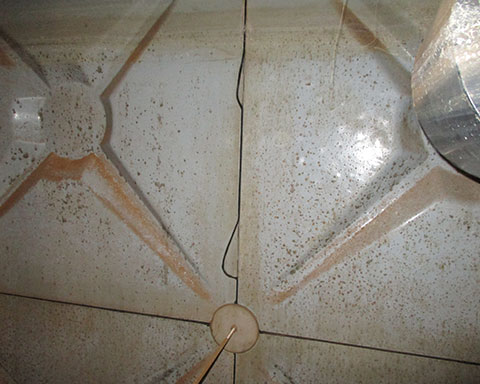
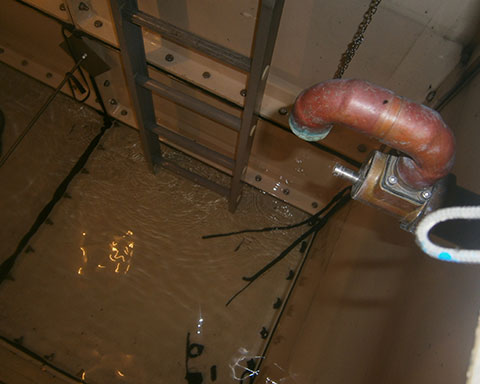
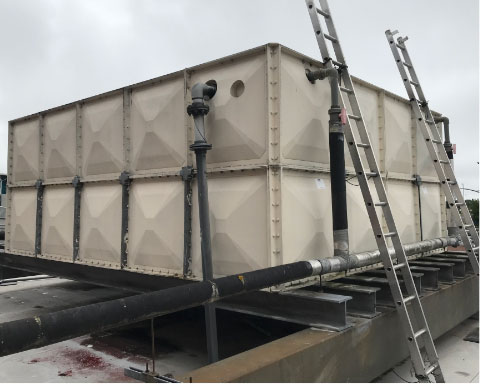
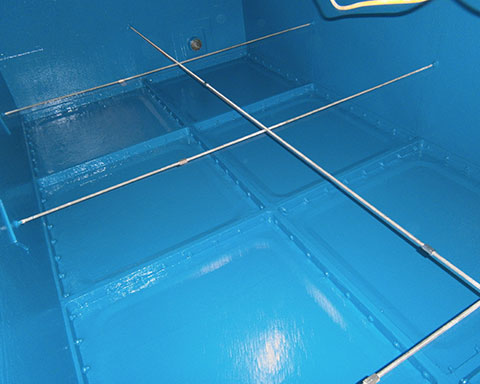
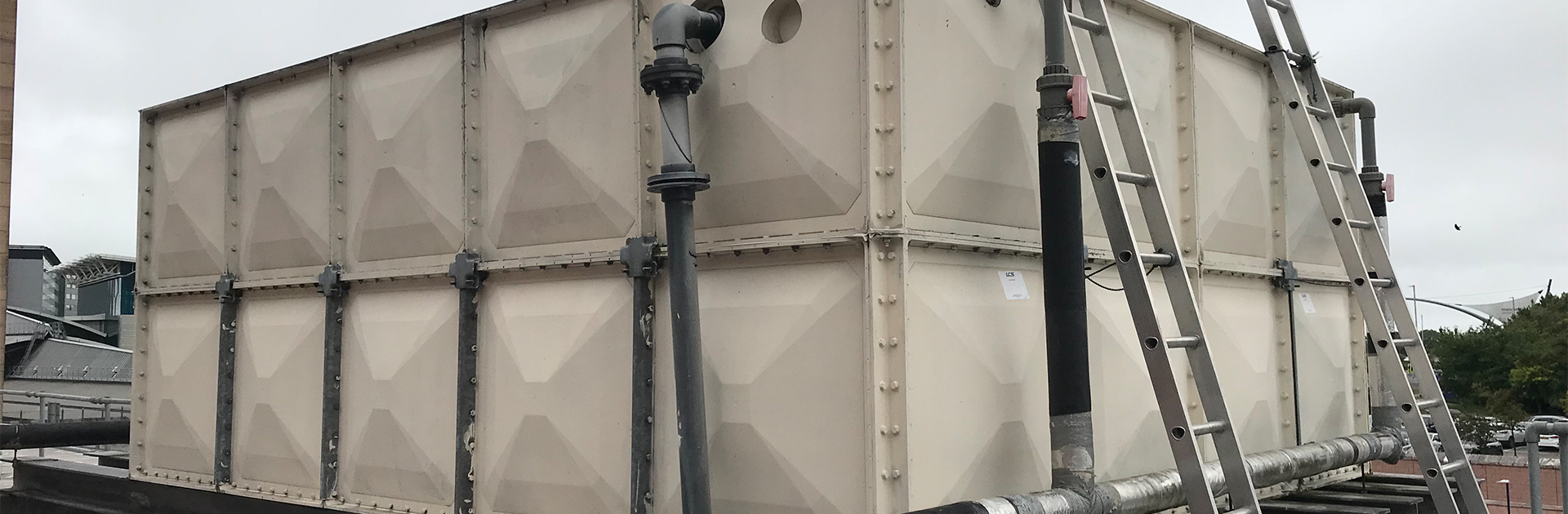
Most engineers who replace their steel water storage tanks for brand new plastic tanks or GRP water storage tanks believe that this is the ‘ultimate’ solution. Unfortunately, having now repaired and relined literally hundreds of glass reinforced plastic water storage tanks, we know this not to be the case. We are constantly being asked to repair and reline glass reinforced plastic water storage tanks, some of which are only months old. This is because the problem faced by all engineers who are responsible for the maintenance of glass reinforced plastic tanks is that even with regular cleaning and chlorination, bacteria such as micro-aquatic organisms will continue to multiply as they are protected in the habitat provided by air filled cavities and fine cracks that often cannot be seen with the naked eye. These cavities and cracks in the internal substrate allow bacteria to nest and proliferate.
The problems start to occur when the water molecules migrating into the glass reinforced plastic tank encounter other chemicals inside the laminate, primarily water-soluble materials (WSMs) such as the emulsion binders used to hold the glass mat together before it is moulded. The water molecules can then have a chemical reaction with these substances, forming larger molecules of a new chemical, often acidic – which unlike the original small water molecules, cannot carry on passing through the GRP. These larger molecules are then trapped. This is the point at which osmosis actually starts.
Osmotic blistering of the GRP substrate due to water permeation can also lead to deterioration of the gel coat and, subsequently, a surface which is highly likely to harbour and promote the growth of micro-aquatic organisms.
It should be considered that, if not looked after and ignored, such internal water osmotic blisters will burst putting their contaminated contents into the potable water. These chemicals not only have a very unpleasant taste but are also toxic! For this reason, GRP is not recommended or approved by the DWI (Drinking Water Inspectorate) for drinking water storage tanks.

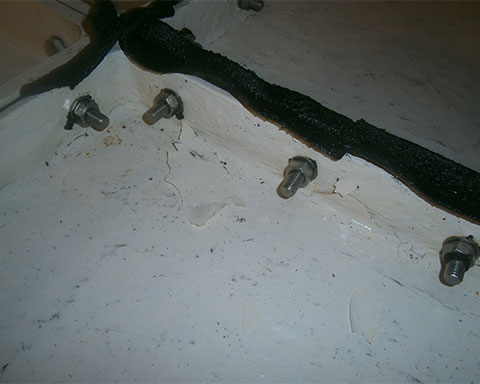
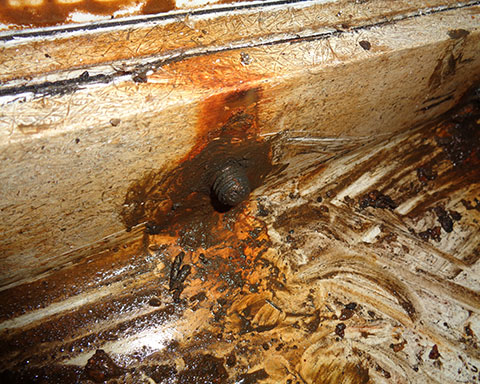
There can also be numerous areas of corrosion to the steel fastenings which hold the glass reinforced plastic tank panels together. Black spore fungi is also common in glass reinforced plastic tanks and is notorious for spreading, predominantly where there is a combination of water and air at an ambient temperature. These spores tend to multiply very quickly and produce a grey or black jelly-like growth on the internal GRP surface. Another common fault associated with glass reinforced plastic tanks is the deterioration of the mastic used between the sectional glass reinforced plastic tank panels and the subsequent leaking of water. The mastic commonly used in these joints often deteriorates rapidly following years (sometimes months) of use and this, combined with the excessive structural movement of the plastic and the chemical dosing regime will lead to the eventual leaking of the tank from these jointed areas. The consequential loss of water through these joints can be catastrophic.
In our experience, there is usually no regress to the original manufacturer / supplier of the glass reinforced plastic tank because they predominantly only offer a maximum of 12 months guarantee and do not guarantee the tank against leaking!
The Solution
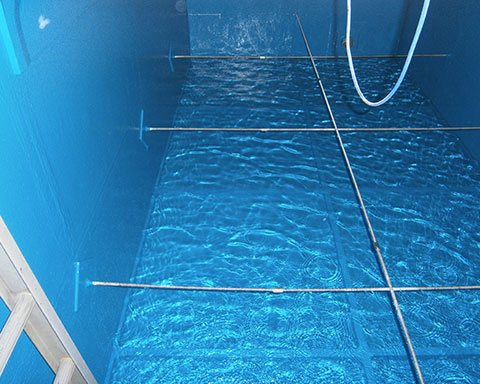
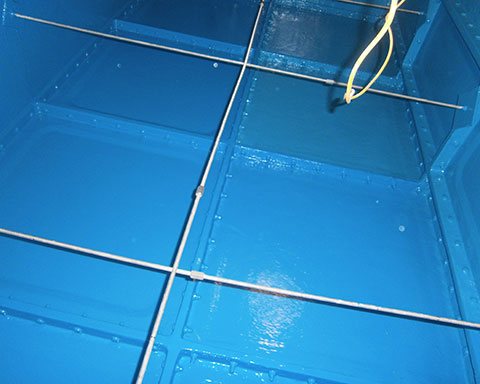
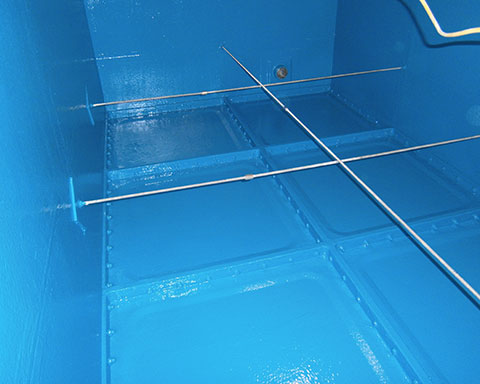
3M™ Scotchkote™ Urethane Coating 165PW offers numerous economic, technical and environmental features and benefits for use in the repair and relining plastic potable water storage tanks and structures, some of which are highlighted as follows: