




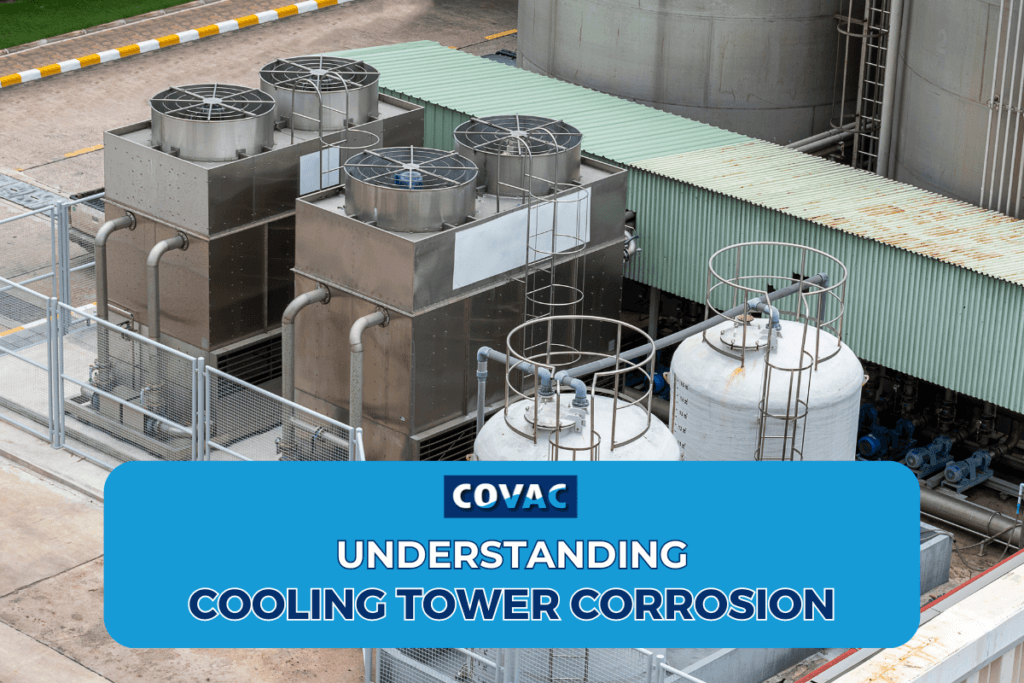
Cooling towers are important in a wide variety of buildings. As such, facility managers should be aware of cooling tower corrosion as an issue.
Most importantly, as a site manager you should know how to prevent corrosion in your cooling tower. Corrosion can impact the performance of your cooling tower, having a knock on effect for the entire facility.
With proper maintenance cooling tower corrosion, for the most part, can be prevented and sometimes even reversed. As a team with a wealth of maintenance experience, at COVAC can attest to this.
This article will provide you with an extensive overview of cooling tower corrosion. We will explore in more detail how it occurs, as well as common preventative maintenance you can perform. Continue reading to get all the information.
What is the Purpose of Cooling Towers?
Simply put, a cooling tower removes excess heat from your industrial facility through evaporative cooling. It removes heat from water by evaporating a small amount of it that is recirculated in the unit. It is commonly used to cool water, as well as a huge heat exchanger.
In an industrial facility, a cooling tower plays a vital role in ensuring optimal temperatures. Thus, it needs to be well maintained and certainly free of any corrosion or signs of decay.
Now you understand the purpose of a cooling tower, let’s take a look at the causes of corrosion and preventative measures you need to implement.
What Is Cooling Tower Corrosion?
Cooling tower corrosion is the gradual deterioration of metal components caused by chemical or electrochemical reactions between the metal, water and dissolved oxygen within the system.
Cooling towers are particularly vulnerable because they operate with recirculating water that concentrates minerals, chemicals and microorganisms, all of which can accelerate corrosion.
What Causes Corrosion in Cooling Towers?
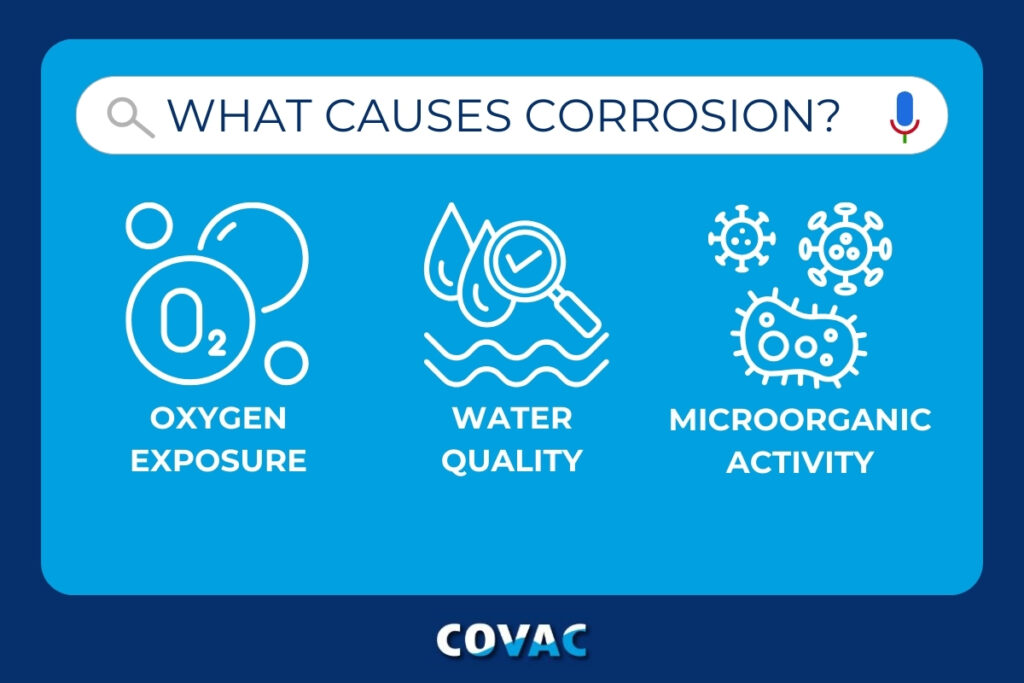
Cooling tower corrosion occurs when metal components react with water, oxygen and chemicals in the system. Over time this electrochemical reaction causes metal to deteriorate, leading to leaks, equipment damage and reduced cooling efficiency.
Corrosion is common in cooling towers because the system constantly circulates water, oxygen and dissolved minerals, all of which accelerate corrosion processes. It is important to diagnose and fix the issue promptly. Here are some of the chief causes for corrosion in more detail:
- Oxygen Exposure
If oxygen is able to enter your water tank, it can react with its metal surface thus initiating oxidation. When left untreated for longer periods of time, this can turn into corrosion.
- Water Quality
Another reason your cooling tower might start corroding is poor water quality. The minerals in poor quality water lead to scale formation. Moreover, ions like chlorine and sulphate can increase the corrosion rate.
- Microorganic Activity
Bacteria, algae, fungi and other microorganisms found in your water tank can also promote and speed up the corrosion process.
What Types of Corrosion Occur in Cooling Towers?
Several different types of corrosion can develop in cooling tower systems depending on water chemistry, materials and operating conditions. The most common types found in cooling tower systems are uniform corrosion, pitting corrosion, crevice corrosion, galvanic corrosion and microbiologically influenced corrosion (MIC).
Uniform Corrosion
Uniform corrosion occurs when metal surfaces corrode evenly across the entire surface of the cooling tower. This type of corrosion gradually thins the metal over time and is often caused by ongoing exposure to oxygen and untreated water. While it develops slowly, it will eventually weaken pipes, basins and structural components if it is not controlled.
Pitting Corrosion
Pitting corrosion forms small, deep holes in the surface of metal. It usually happens when localised chemical reactions break down the protective layer on the metal. Pitting corrosion is particularly dangerous in cooling towers because the damage can penetrate deeply into pipes or heat exchangers while being difficult to spot during routine inspections.
Crevice Corrosion
Crevice corrosion develops in tight spaces where water becomes trapped and stagnant. These areas can include joints, bolts, gaskets and deposits of debris within the system. Because water in these crevices does not circulate properly, corrosive conditions can build up and cause damage quickly.
Galvanic Corrosion
Galvanic corrosion occurs when two different metals come into contact in the presence of water. An electrical reaction forms between the metals, causing the less resistant metal to corrode faster. This can happen in cooling towers where components made from different metals are connected within the same system.
Microbiologically Influenced Corrosion (MIC)
Microbiologically influenced corrosion is caused by bacteria, algae and other microorganisms growing within the cooling tower water system. These organisms form biofilms on metal surfaces and produce acidic by-products that accelerate corrosion. Without proper water treatment, microbial growth can quickly lead to significant system damage.
What Are the Signs of Cooling Tower Corrosion?
If corrosion is developing in a cooling tower, there will be a few warning signs first, including:
- Rust or discolouration on metal components
- Pitting or small holes in pipes or basins
- Leaks developing in the system
- Reduced cooling efficiency
- Metal debris appearing in the water system
Corrosion can also cause blockages and equipment damage if metal fragments enter the circulating water system.
How to Prevent Corrosion in Your Cooling Tower?
Understanding the steps which can be taken to reduce the chances of corrosion in a cooling tower is important. Below are some preventative measures you can implement. In most cases, this will guarantee the longevity of your cooling tower.
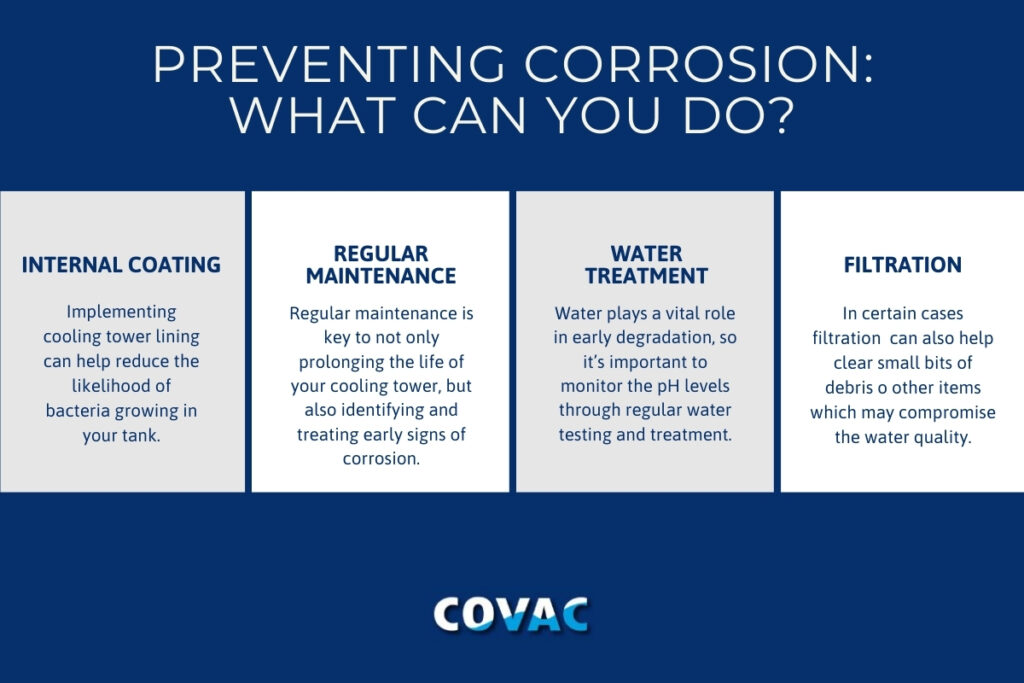
- Implement Cooling Tower Lining
One thing which can be done to stop corrosion is installing cooling tower lining. This is a vital maintenance step which involves adding a protective coating to the walls of your cooling tower. Doing so can reduce the likelihood of bacteria growth and corrosion while also improving water quality.
- Regular Maintenance
Having someone with experience, perform regular maintenance tasks is another essential step to preventing corrosion in a cooling tower. Not only is this able to prolong the life of your tower, but it can help identify issues before they have any detrimental effect.
- Water Treatment
As stated, water can play a vital role in the early degradation of your cooling towers. Therefore, it is important to have the water regularly examined and treated. Monitoring and adjusting pH levels, as well as chemical treatments, can ensure the water quality is sufficient and not likely to initiate corrosion.
- Filtration
In some cases, filtration may also help clear bits of debris or other items compromising the contents of the cooling tower. Ensuring filtration is completed helps preserve the quality of the water and subsequently decrease the chances of corrosion.
Cooling Tower Maintenance by COVAC
If you are looking to invest in the longevity of your cooling tower and avoid corrosion, it is highly recommended to hire a professional who can complete regular maintenance.
The team at COVAC offers both maintenance and lining for cooling towers, which can preserve the quality of the asset as well as decrease the likelihood of premature corrosion. If you would like to enquire about the following services, contact us today and speak to an advisor. We are available to guide you through the process, as well as answer any questions you may have.