




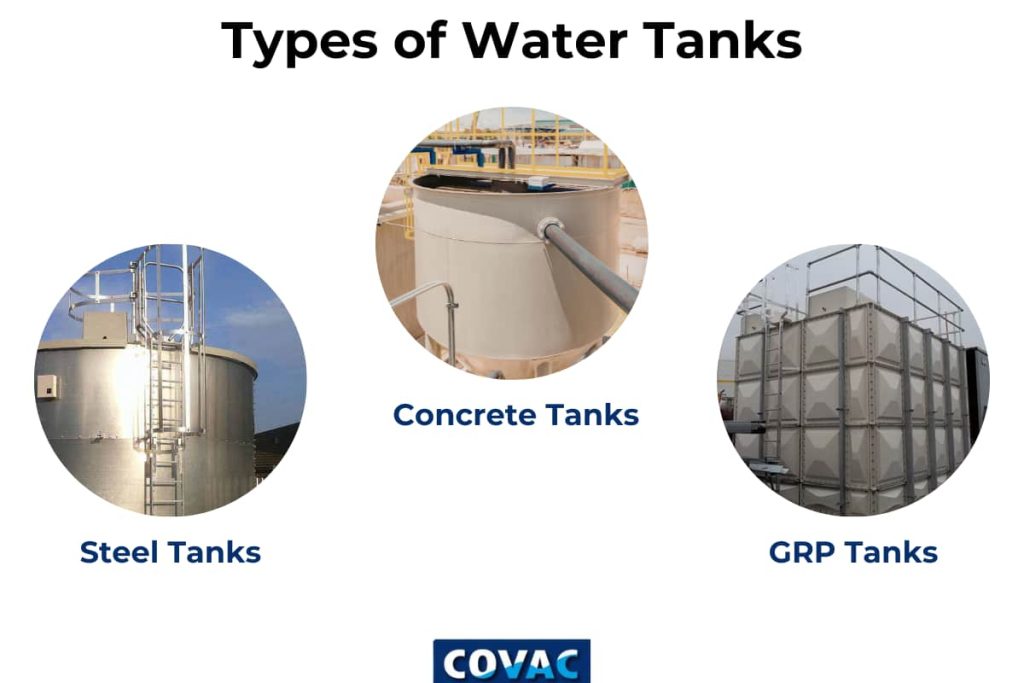
Understanding the main types of water tanks is not as complicated as it sounds. There are three materials you will encounter again and again: concrete, steel and GRP (Glass Reinforced Plastic).
Each has its own strengths, its own weaknesses and its own maintenance needs.
In this article we will cover these different types of water tanks.
Concrete Water Tanks
Concrete tanks have been used for decades for water storage across everything from municipal water treatment plants to large commercial properties. There are millions of them still in active service across the UK.
Why are concrete water tanks used:
- Extremely durable and built to last for decades
- Can be constructed to almost any size or shape on site
- Good thermal mass, which helps keep stored water at a stable temperature
- Resistant to fire and natural ground movement
The downsides:
- Concrete is porous, which means it can absorb moisture and harbour bacteria over time
- Cracks and surface degradation are common in older tanks
- Hard to inspect without proper access hatches
- Once the internal surface starts to deteriorate, water quality can be affected quickly
This is exactly why concrete tank lining is so important. A quality internal coating seals the surface, prevents contamination and can add many more years of reliable service to a tank that might otherwise need replacing entirely.
Steel Water Tanks
Steel tanks come in a couple of main forms: galvanised flat steel tanks and pressed sectional steel tanks. The sectional variety is particularly common in commercial buildings because the panels can be assembled inside a plant room, removing the need to lift a full tank into position.
Why are steel water tanks used:
- Strong and capable of storing very large volumes of water
- Sectional designs can be built in confined spaces
- Widely available and relatively quick to install
- Suited to fire suppression systems and industrial applications
The downsides:
- Steel corrodes. Without proper internal protection, rust forms and can contaminate the water supply
- Galvanised coatings wear down over time, especially around welds and joints
- Older tanks often develop pinhole leaks along seams
- Ongoing maintenance is essential to stay compliant with water quality regulations
Steel tank lining addresses the corrosion problem directly. A protective coating applied to the interior surface of the tank creates a barrier between the steel and the stored water.
Done correctly and using a WRAS-approved product, it is one of the most cost-effective ways to extend the life of a steel tank without full replacement.
GRP Water Tanks (Glass Reinforced Plastic)
GRP tanks are the modern option for water storage. Also known as fibreglass tanks, they are now standard specification on many new commercial and industrial builds. Their combination of lightweight construction, corrosion resistance and flexibility in size has made them incredibly popular.
Why are GRP water tanks used:
- Naturally resistant to rust and corrosion
- Lightweight and easy to transport and install
- Available in sectional or single-piece formats
- Good insulation properties
- Smooth internal surface makes cleaning straightforward
The downsides:
- The panels and joints can develop cracks or delamination over time, particularly if they have been poorly installed or exposed to UV light
- Older GRP tanks can become brittle
- Leaks often appear at panel joints before anywhere else
- Not immune to biological growth inside the tank if water sits stagnant
Even GRP tanks benefit from internal lining, especially once they are showing signs of age. A professional relining job can restore a failing GRP tank to full working order and bring it back into compliance with current drinking water standards.
A Quick Comparison of Water Tanks
| Feature | Concrete | Steel | GRP |
| Durability | Very high | High | High |
| Corrosion risk | Moderate | High | Low |
| Typical lifespan | 40+ years | 20-30 years | 20-25 years |
| Lining recommended? | Yes | Yes | Yes (older tanks) |
| Common issue | Cracking, porosity | Rust, joint failure | Delamination, cracked joints |
What Happens When a Water Tank Starts to Fail?
Regardless of the material, the signs of a deteriorating water tank tend to follow a similar pattern:
- Discolouration or unusual taste in the water supply
- Visible rust staining or debris in the tank
- Failed water quality tests
- Physical cracks, leaks or signs of corrosion on inspection
- Biological growth such as algae or biofilm inside the tank
If you spot any of these, it is worth acting quickly. Replacing an entire tank is expensive and disruptive. In the majority of cases, a professional tank lining or refurbishment is all that is needed.
Water Tank Refurbishment at COVAC
At Covac, we have been lining and relining concrete, steel and GRP water tanks for over 25 years. The question we get asked most often is a simple one: is it worth repairing or should we just replace it?
In most cases, the answer is repair. A properly applied internal lining using a WRAS-approved coating such as Acothane DW can:
- Seal cracks and porous surfaces
- Eliminate corrosion and prevent it from returning
- Bring a tank back into full compliance with WRAS and DWI standards
- Come with a 10-year guarantee
It costs a fraction of full tank replacement and causes far less disruption to your operations.
If you are not sure about the condition of your water tank or want advice on the right approach for your site, get in touch with the Covac team today. We cover the whole of the UK and can arrange an inspection at short notice.