




When a tank holds drinking water, chemicals or fire-protection water, the internal surface takes the most wear. If that surface starts to corrode or break down, the tank can contaminate its contents. Tank lining systems play the biggest part in preventing this.
We’ll explain exactly what tank lining is, how it protects concrete, steel and GRP tanks and the regulations that apply to potable water systems.
What Is Tank Lining?
Tank lining is the process of applying a protective coating to the internal surface of a tank so the structure resists corrosion, contamination and physical wear. The type of tanks we are talking about are large commercial or industrial storage tanks, such as water tanks, chemical tanks or fire-suppression tanks, nothing you would ever find in your garden or at home.
Think of it like adding a protective “inner skin” that stops rust, loose particles and microbiological growth from entering whatever the tank holds. For example, in water tanks, tank lining helps prevent sediment, bacteria and corrosion by-products from contaminating the water supply.
What types of tanks need lining?
Most types of tanks need lining, especially those that store water, chemicals or food products. These are the big tanks found in places such as hospitals, factories, hotels, water treatment plants, food production sites and commercial buildings.
These tanks are often made from concrete, steel or GRP (glass-reinforced plastic).
Concrete tanks: Concrete tanks are used for storing water or chemicals, but concrete is naturally porous and can crack over time. Tank lining seals the surface so liquid can’t seep in or out, preventing contamination and structural damage.
Steel tanks: Steel tanks are strong but very vulnerable to rust when exposed to water, oxygen or chemicals. A lining acts as a protective barrier that stops corrosion and extends the tank’s lifespan.
Water tanks: These tanks hold potable or process water, so keeping the water clean is essential. Lining prevents rust and harmful bacteria, such as legionella, from getting into the water supply.
Chemical tanks: Chemical tanks hold corrosive or reactive liquids that can quickly damage unprotected surfaces. Linings are used to resist chemical attack and stop the tank from degrading or leaking.
Fire Sprinkler Tanks: Sprinkler tanks store large volumes of water for emergency use, but stagnant water can cause corrosion and bacterial growth. Lining keeps the tank watertight and ready to operate in a fire.
Because these tanks hold large volumes and are essential to operations, they need specialist protection to prevent corrosion, leaks, contamination and structural wear.
Why are Tank Lining Systems Important?
To understand why tank lining systems are important, consider the risks of not treating a tank. Unprotected storage and water tanks can rust, crack, leak or grow bacteria and mould that will contaminate their stored content. If that tank holds drinking water in a hospital, school, workplace or public buildings, this becomes a serious health risk.
Key reasons for their importance include:
How does tank lining control corrosion?
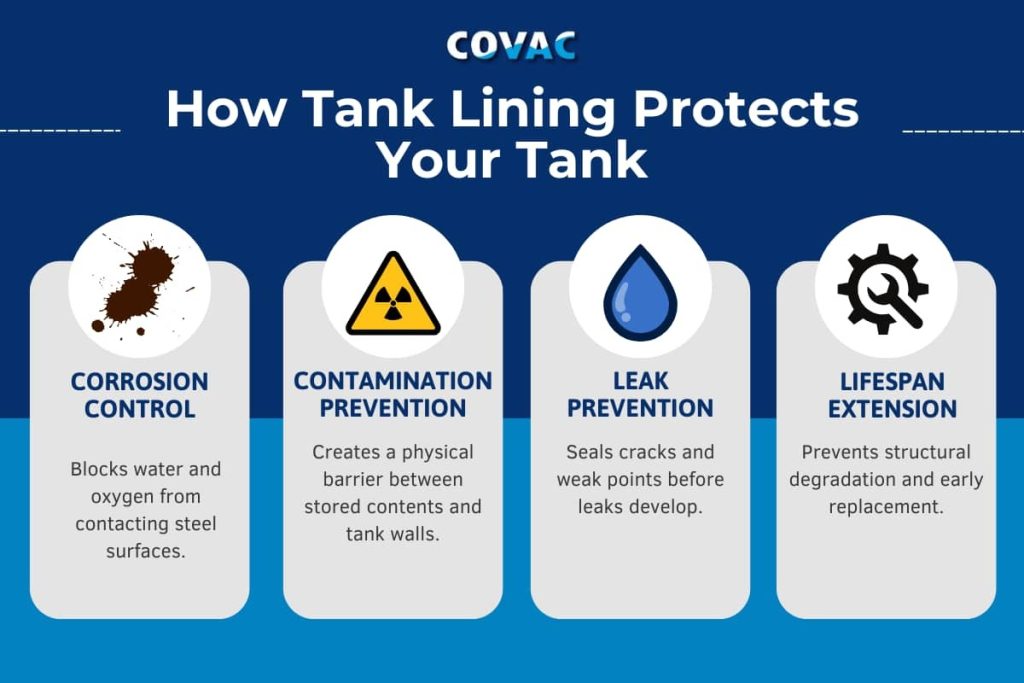
If a tank is made of steel, water and oxygen will naturally cause it to rust. A lining works like a shield, stopping the water from ever touching the metal to prevent corrosion.
How does tank lining prevent contamination?
Tank lining prevents contamination by creating a barrier that physically separates the stored substance from the tank’s internal surfaces. For water tanks this physical barrier stops bacteria and debris from entering the water.
For a deeper look at how proper lining can safeguard water systems, see our guide on how tank relining can prevent contamination in water supplies.
How does tank lining extend a tank’s lifespan?
By doing all of the above, preventing corrosion and contamination, tank lining protects what’s inside the tank as well as the tank itself. By shielding the surface from structural deterioration, the tank stays stronger for far longer, saving you from early repairs or full replacements down the line.
How does Tank Lining Prevent Leaks?
A lining creates a watertight coating over the tank’s interior. This seals small cracks or weak areas in the tank walls so they don’t turn into leaks. This helps avoid:
- water loss
- expensive repairs
- damage to surrounding areas
- contamination of the environment
How does Tank Lining Help Meet Regulatory Compliance?
Some tanks, especially those holding drinking water, must meet strict safety standards. Using an approved lining (such as WRAS or DWI-approved coatings) ensures the tank meets legal requirements and won’t contaminate the water. This helps businesses avoid:
- failing inspections
- legal penalties
- health and safety risks
What are the Different Types of Tank Lining Materials?
Solvent-free polyurethane coatings
Solvent-free polyurethane coatings have durability, hygiene and long-term performance and are safe for drinking water. These are popular for potable water tasks because they are WRAS-approved and work on concrete, steel and GRP. They give corrosion and erosion resistance and can be supplied with long-term guarantees.
To understand why WRAS- and DWI-approved polyurethane coatings are trusted for potable and fire-water tanks, see the full breakdown of Acothane DW properties.
Epoxy coatings.
Epoxies bond well to many substrates and handle chemicals, but cure behaviour and long-term suitability for drinking water must be checked against WRAS or DWI listings.
Cementitious coatings.
These are cement-based and can repair concrete defects while providing a protective surface. They suit some non-potable uses but rarely match polyurethane performance for potable water tanks.
GRP relining systems.
These rebuild structural strength and provide a smooth internal surface but require specialist installation.
How to Choose the Right Tank Lining Material
To choose the right tank lining material by matching the coating properties to the tank condition and what’s inside.
Contents:
First prioritise drinking water compatibility if the tank stores potable water.
Substrate type:
Concrete that has cracks will need structural repairs and a coating that resists moisture. Steel needs a coating that blocks corrosion. GRP may need a different surface treatment before a new lining goes down.
Access and downtime:
Some high-performance coatings cure fast and let you return a tank to service quicker. Some products need multiple coats with intermediate curing periods.
What are Common Failure Modes for Tank linings?
Tank linings fail for a few predictable reasons. Most problems happen because the surface wasn’t prepared properly, the wrong coating was used or the tank itself deteriorated underneath the lining.
- Blistering – Why do bubbles appear under a lining?
Blistering happens when moisture gets trapped under the tank’s coating, causing it to lift and form bubbles. It’s a bit like paint peeling off a damp wall.
2. Delamination – Why does the lining peel off?
Delamination is when the coating loses its grip and starts to peel away from the tank.
This usually happens when the surface wasn’t cleaned or roughened up enough for the coating to bond.
3. Corrosion Under the Lining – Why does rust appear under the coating?
If the lining doesn’t fully seal the surface, rust can start at weak points like welds or joints and spread unseen.
What is the Difference Between Tank Lining and Tank Relining?
Tank lining usually refers to applying a protective coating to a new or existing surface that is in good structural order. Tank relining describes the work done to restore an existing, degraded tank. Relining begins with repairing cracks, removing old coatings and then applying a full lining system so the tank returns to a new condition. Relining a tank will, in most cases, avoid the cost of a full replacement.
If you’re weighing up whether to reline or replace a tank, read our helpful comparison that explains the differences in cost, disruption and lifespan: Water Tank Lining vs Water Tank Replacement – Which Is Better?
What are the tank lining regulations in the UK?
Water Supply (Water Fittings) Regulations 1999
The Water Supply (Water Fittings) Regulations 1999 are national regulations in England and Wales that make sure nothing inside a water system can contaminate drinking water.
If a tank coating is going to touch potable water, it must be approved for contact with drinking water.
This is where WRAS and DWI come in…
WRAS Approval (Water Regulations Advisory Scheme)
WRAS approval shows that a product has been tested and proven safe for drinking water.
If a tank lining is WRAS-approved, it means:
- it won’t contaminate the water
- it won’t break down in contact with water
- it meets UK water safety standards
You can check approved products in the WRAS directory.
DWI (Drinking Water Inspectorate) Approval
DWI approval is similar to WRAS but is used mainly by water companies, treatment works and large public water systems. If the tank is part of a water supplier’s infrastructure, DWI approval is often required.
Think of it like this:
- WRAS = everyday potable water systems (buildings, hospitals, schools)
- DWI = water industry and public water supply infrastructure
Health & Safety Requirements (Legionella & Confined Spaces)
Contractors working on potable water tanks also have to follow:
- HSE guidance on legionella control (because stagnant water can grow harmful bacteria)
- Confined Spaces Regulations (because most tanks are tight, enclosed spaces)
This ensures the work is done safely and hygienically. A properly lined or relined tank dramatically reduces contamination risk and helps maintain consistent water quality over time. Learn more in our article How to Improve Water Quality with Water Tank Relining.
Ongoing inspection is equally important, particularly as temperatures begin to rise after winter. Our guide to maintaining commercial water systems in spring outlines the seasonal checks that help prevent stagnation, bacterial growth and coating stress as systems return to higher demand.
Trust COVAC to Protect Your Tanks
COVAC has spent more than two decades working on tanks in hospitals, schools and commercial sites. We work with WRAS-approved and DWI-listed systems such as Acothane DW, so when we line or reline a tank, you know the water stays clean and the structure stays protected. Our clients like the reassurance that every project comes with a ten-year guarantee and a full photographic report. This provides you with a clear record of the work we’ve carried out and the condition of the tank at each stage.
Most of our work comes from people who’ve had a problem with their tank and want a solution that lasts. That is what we focus on. If you’re dealing with corrosion, leaks, coating failures or an ageing tank that now needs relining, our team can survey it, explain what’s happening and, most importantly, fix it. Contact us today to speak with the COVAC team, and we’ll guide you through the best way to protect your tank for the long term.