



Corrosion and leaks are two of the most common causes of tank failure across water, chemical and industrial storage systems. A professionally applied tank lining creates a continuous internal barrier that separates the stored liquid from the tank substrate. This prevents corrosion from developing, seals vulnerable areas such as joints and fixings and significantly extends the working life of the tank.
Why is Tank Lining Important for Preventing Corrosion and Leaks?
Tank lining is the main defence between the tank structure and the liquid it stores. In potable water tanks, that means constant exposure to moisture, oxygen and fluctuating temperatures. In chemical tanks, the exposure is even more aggressive. Once water or chemicals reach steel, concrete or GRP surfaces, deterioration and corrosion will accelerate.
When lining is done correctly, it does three things at once:
- Stops corrosion developing
- Prevents leaks from forming
- Extends the working life of the tank by many years
A properly specified and applied lining creates a seamless, fully bonded membrane across the entire internal surface. It prevents direct contact with water or chemicals and protects the tank as a complete system rather than a patchwork of components.
How Does Corrosion Start Inside a Tank?
Corrosion in a tank begins when moisture and oxygen reach exposed surfaces. It usually starts small and spreads quietly.
Once corrosion starts, it rarely stays local. In tanks it spreads behind coatings, under mastic and along joints. By the time leaks appear externally, internal damage is often already established.
Tank lining interrupts this process by sealing the entire internal surface and removing the conditions corrosion needs to survive.
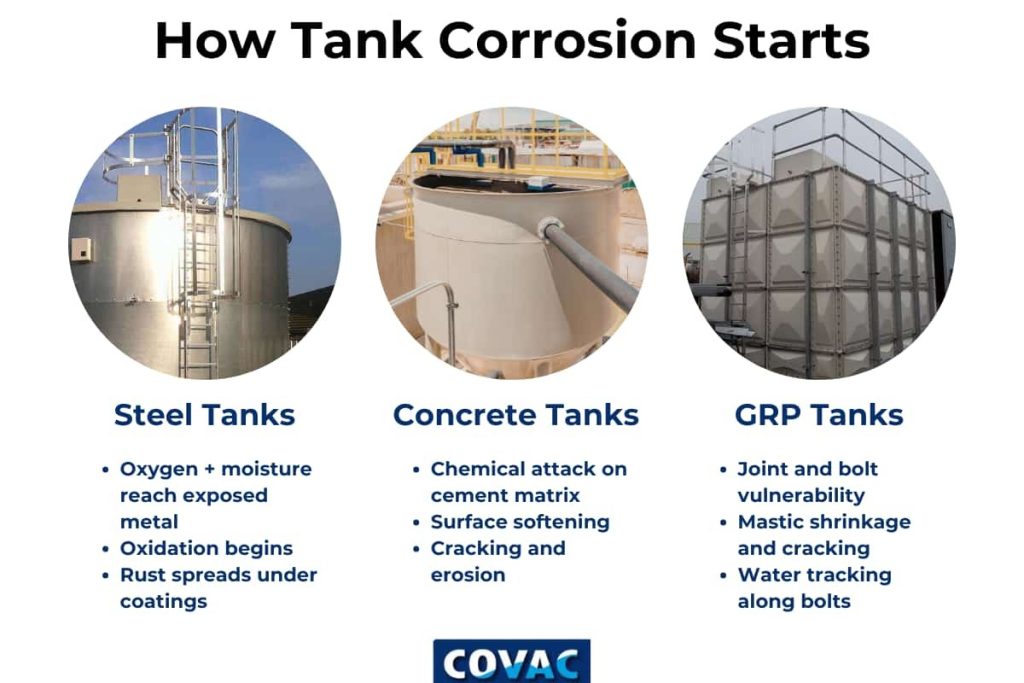
How does corrosion start in steel tanks?
In steel tanks, corrosion begins when oxygen and moisture reach exposed metal. Even minor coating defects allow water to penetrate, which causes steel to oxidise. This process to the spread of rust spread underneath tank coatings. This underfilm corrosion often goes unnoticed until blistering or flaking appears.
How does corrosion start in concrete tanks?
In concrete tanks, corrosion typically occurs due to chemical attacks and surface erosion. Water and dissolved chemicals react with the cement matrix. Over time, this causes the tank’s surface to soften, crack and erode. Further structural damage takes place if steel reinforcements are also exposed.
How does corrosion start in GRP tanks?
In GRP tanks, the panels themselves resist corrosion, but the vulnerable points are different. Sectional joints, such as steel fixings and gel coat surfaces, are susceptible to corrosion and degradation. Once water tracks along bolts or into joint lines, deterioration will begin to spread behind the panels and beneath the mastic.
For practical tips on spotting early corrosion and protecting your tank structure before leaks develop, read our guide on preventing water tank corrosion.
Why Do GRP Tanks Leak at the Joints?
The most common failure in GRP tanks is leakage through the sectional joints. This happens for several reasons:
- When a tank is left empty, the mastic between panels can dry out, shrink and crack.
- When the tank is refilled, water finds its way through these cracks
- Bolts are sometimes overtightened.
- Older tanks suffer mastic degradation, black mould growth and blistering as the gel coat breaks down.
GRP tanks expand and contract slightly as temperatures and water levels change. This constant movement places stress on joints that may already have corrosion. Once the mastic cracks, water finds a path through the joint line and along bolt penetrations.
Without tank relining, any repairs can be temporary. The leak may stop in one place, only to reappear along the same joint weeks or months later.
If you’re dealing with a leaking tank, our article on what to do when a water tank begins to leak can help you understand the initial actions to take.
How Does Tank Lining Prevent Corrosion and Leaks?
Stops Corrosion from the Inside Out
Tank lining creates a physical barrier between the tank and the liquid, so oxygen, water and chemicals can’t reach the steel or concrete. This prevents the chemical reaction (oxidation) which creates rust.
Corrosion is an electrochemical process, and adding a tank lining interrupts that, stopping the reactions before they damage the tank. In water and fuel tanks, bacteria can also create acids that eat away at the metal. Tank lining keeps microbes away too, so corrosion doesn’t get a chance to develop.
Prevents Leaks Before They Start
Tanks naturally develop weak points as time goes on, such as small cracks and hairline leaks that can appear before any visible shows. Leaks in a tank usually begin at weak points:
- Panel joints
- Bolt penetrations
- Surface cracks
- Areas of coating failure
Tank lining acts like a second skin, sealing all those vulnerable areas. This stops:
- Progressive corrosion
- Structural weakening
- Emergency repairs
- Loss of stored water
- Environmental contamination
It fills small pits, reinforces joints, and covers bolt holes. Some modern systems even give a “double wall” effect inside the tank, helping prevent leaks and giving early warning if anything starts to fail.
Provides Chemical Resistance
Not every tank holds the same liquid, which means not every lining will do the job. The right lining is chosen based on what’s being stored, whether it’s acids, alkalis, fuels or water. It’s built to resist the chemicals inside, stopping the tank wall from being eaten away and protecting the product from contamination.
Why is Relining Better Than Replacing a Tank?
If there are signs of corrosion or leaks in a tank, a full tank replacement is an expensive and wasteful solution. Many tanks that leak are still structurally sound. They simply need modern protection.
Tank Relining:
- Restores full watertight integrity
- Extends service life by decades
- Costs significantly less than replacement
- Avoids sending repairable tanks to landfill
- Improves compliance and safety
A tank repair and reline is always a better investment than replacing a tank that still has decades of service left in it.
Tank Relining at COVAC
If your tank is showing signs of corrosion or developing leaks, it’s not something to ignore. Cracks and rust risk water loss, contamination or structural damage.
Professional tank relining from COVAC stops these issues at the source. Our team fully prepares and repairs the tank, sealing joints, cracks, and bolts before applying a durable lining.
A coating such as Acothane DW, used by us at COVAC, is ideal because:
- It remains flexible and moves with the tank.
- It bridges joints and panel transitions.
- It seals microcracks that traditional repairs cannot reach.
- It protects steel bolts against corrosion.
Once lined, the tank becomes a single sealed structure rather than a collection of bolted panels. That is why professionally lined tanks can be guaranteed for ten years against leaking and corrosion.
Get in touch today to discuss your tank and find the right relining solution for your business.